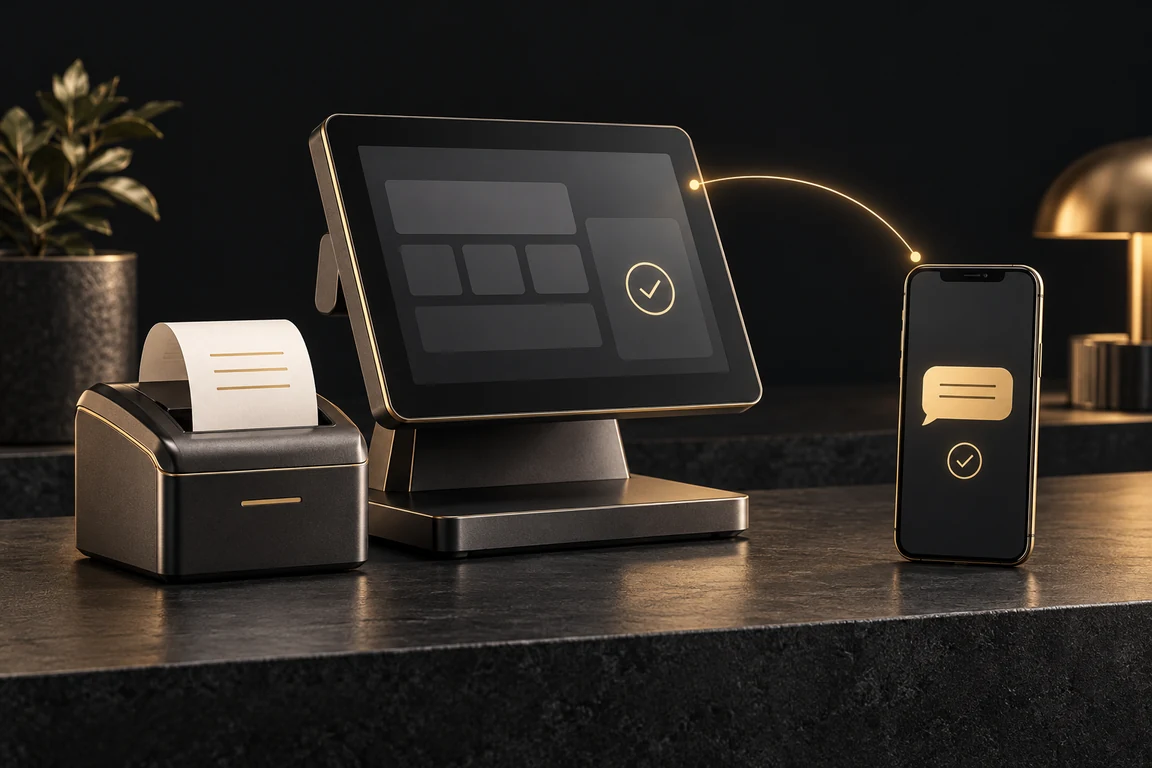
What is an SMS gateway?
An SMS gateway is the service that connects software to the mobile networks. Your website, app, POS or CRM hands it a phone number and a message; the gateway delivers the text to the recipient's network and reports back whether it arrived. No phone or SIM card is involved on your side. It is not quite the same thing as bulk SMS or an SMS API; SMS gateway vs bulk SMS vs SMS API explains the difference.
An SMS gateway in Sri Lanka is one that delivers to local numbers on the four mobile networks, Dialog, Mobitel, Hutch and Airtel, and handles the details those networks expect: approved sender names, local number formats, and Sinhala and Tamil text.
How a message travels through the gateway
A message starts in the dashboard or as a request to the REST API. The gateway checks the numbers, removes duplicates, works out the encoding and segment count, and reserves the credits before anything is sent.
It then hands the message to the network under your approved sender name. Delivery is reported for each number, and the gateway records that receipt against the message so you can look it up, filter it or export it.
- Your system or the dashboard submits the recipients and the message.
- The gateway validates and normalises numbers such as 0712345678 and 94712345678.
- Credits are reserved for the exact number of segments.
- The message is delivered to Dialog, Mobitel, Hutch or Airtel.
- A delivery receipt comes back for every recipient.
What businesses in Sri Lanka use an SMS gateway for
OTP and verification codes are the most time-sensitive use: a login or payment waits on them, so they go through the SMS gateway API straight from the application. Order, delivery and appointment updates are similar, triggered by an event in your own system, such as a sale in a POS or billing system.
Promotions and announcements go out as bulk SMS campaigns to a contact group, often scheduled for a set time. The same gateway serves both, so one account, one balance and one set of sender names covers transactional and marketing messages.
How to choose an SMS gateway in Sri Lanka
Most differences between providers only show up after the first invoice or the first Sinhala campaign. Comparing them on the points below, rather than on the headline rate alone, gives the real cost of a delivered message.
- Coverage: all four networks, Dialog, Mobitel, Hutch and Airtel, ideally at one rate.
- Sender names: alphanumeric names of up to 11 characters, and how long approval takes.
- Sinhala and Tamil: a Unicode segment holds 70 characters, so check that the cost is shown before sending.
- API: REST with token authentication, a cost estimate endpoint and per-message status lookup.
- Delivery receipts: per recipient, not just per batch, and exportable.
- Total cost: the rate per segment plus any monthly fee, minimum spend, setup fee or credit expiry. See how to compare SMS prices.
Getting started
Create an account, request a sender name, and send a test message to your own phone with the free sign-up credits. Watching the delivery receipt come back is the quickest way to judge a gateway.
When you are ready to integrate, generate an API token in the dashboard and call POST /api/v3/sms/send. The bulk SMS pricing page lists the current rate card, the API reference documents every endpoint, and your first API message walks through a request.